

Property value
Expensive properties and belongings cost more to repair and replace, so you’ll have to pay more to cover them.
Unoccupied house insurance covers you when your home is empty for longer than your regular policy will allow.
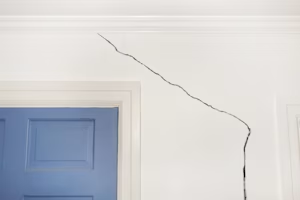
This is because the chances of theft go up when your home is empty for an extended period. An empty house also carries a higher risk of structural damage – for example, if a pipe bursts and there’s no-one there to repair it, the effects could be even more damaging.
🚩 Standard home insurance only insures you if your home is empty for up to 30 or 60 days, depending on the terms. And if anything happens outside this period you won’t be covered.
Most unoccupied homeowners will at least need buildings insurance, but contents insurance will only be necessary if there are possessions/contents in the property.

Yes. In insurance terms, vacant and unoccupied mean two different things – and the distinction matters because it affects the type of cover you need and how insurers assess the risk.
An unoccupied property is one that is furnished and ready to live in, but currently has no one staying there. It might be empty for a short or medium period, such as while the owner is on an extended trip, or the sale is going through.
A vacant property, on the other hand, is completely empty and often not suitable for immediate habitation. It typically has no furniture, appliances, or personal possessions, and may be awaiting renovation, redevelopment, or sale. For instance, if you’ve bought a fixer-upper and stripped it back to bare walls and floors while you plan renovations, your property is vacant.
The difference matters because vacant properties generally present a higher risk for insurers. With no one checking on them and no contents inside, issues like burst pipes, vandalism, or structural damage can go unnoticed for longer.

Situations in which you might need unocccupied property insurance include:
If you’re carrying out major renovations or construction that means you need to move out for a while, unoccupied property insurance can help protect your home while work is underway.
You may need cover if you’ve sold your home and are waiting for the sale to complete or for the new owners to move in.
If you’re travelling or away on holiday for an extended period, your home could be classed as unoccupied. Specialist cover helps protect it while you’re away.
For second homes or holiday lets that aren’t your main residence, unoccupied property insurance helps safeguard your property during empty periods.
If you’re admitted into long-term medical care and your home will be empty, this type of cover can keep your property protected.
When you’re managing a property after the death of a loved one and waiting for probate, unoccupied property insurance helps protect it until legal matters are settled.
If you’re a landlord and your property is empty between tenants, you might already have some protection under your landlord insurance. If not, unoccupied cover can fill the gap.
Unoccupied home insurance policies can vary between providers, but most include protection against the key risks that can occur when a property is empty for an extended period.
Storm, flood or fire damage
In case a natural disaster happens while you’re away
Escape of water or oil
For if a pipe bursts or there’s a leakage somewhere in the house
Theft and/or attempted theft
In case someone successfully breaks in or attempts to break into your home and steal your belongings
Vandalism
In case criminal damage occurs in your absence
Legal expenses
In case you need to pay legal fees for the removal of squatters or trespassers or due to personal identity theft
Public liability insurance
For damage caused by something falling off the property; for example, if a roof tile falls and breaks a car window
Unforced entry
Leaving your doors and windows unlocked or open is a sure-fire way to void a home insurance policy, because thieves and squatters can get into your property without forcing entry
Major works
Some insurers will refuse to cover incidents that happen during major works such as an extension or repairs to the home’s structure
Contractors
If you hire contractors to work on your home while it’s unoccupied, you might not be covered for any damage they cause. Contractors should have their own insurance to cover the damage
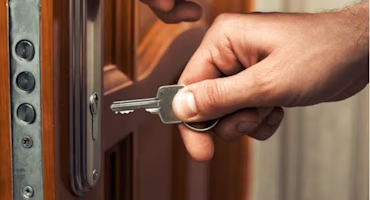
Nearly a third of people still have a key to one of their previous homes, according to the Master Locksmiths Association (MLA). This highlights how easily an old key could still provide access to a property. If you haven’t changed your locks since moving in, someone with an old key could enter your home without forcing entry – and because insurers typically require evidence of forced entry for a theft claim, this could lead to your home insurance being invalidated.
To protect your property and ensure your cover remains valid, always change or upgrade the locks when you move into a new home or after giving keys to tradespeople, tenants, or anyone no longer authorised to access your property. Using insurance-approved locks and keeping spare keys secure will also strengthen your home’s security and help maintain your insurance protection.

The cost of insurance for unoccupied homes will depend on factors such as:
Expensive properties and belongings cost more to repair and replace, so you’ll have to pay more to cover them.

If your property is in an area with high crime rates or a high risk of flooding, the price of cover will go up.

Improving the security features of your home when it’s empty will help to prevent burglaries and should therefore reduce the cost of cover.

Ensuring your water pipes are insulated during winter months will help to avoid escaped water damaging your home and can therefore lead to lower premiums.

The more added extras you choose and the higher the level of cover you take out, the more you’ll pay in premiums.

Extras such as legal expenses cover, accidental damage protection, or home emergency assistance can be added to your policy for an additional cost, influencing the overall price of your unoccupied home insurance.
Unlike some of our competitors, MoneySuperMarket is not owned by an insurance company. So we can offer the best value, with savings delivered straight to you.
By combining independence with our excellent technology, we can negotiate the best prices and the best value on products and services.
Based on 38,657 reviews
our customers rate us
MoneySuperMarket has won the Feefo Platinum Trusted Service Award, an independent seal of excellence, which recognises businesses that consistently deliver a world-class customer experience.

Making a claim might seem stressful, but remember that insurers expect claims and will guide you through the process one step at a time.
Here’s how to claim:

If there’s danger (fire, flooding, structural damage), call emergency services and make sure the property is secure.

Turn off water or power if needed and arrange small emergency repairs. Keep receipts for reimbursement.

For theft or vandalism, get a crime reference number for your insurer.

Call the claims line or use the online portal. Explain it’s an unoccupied-property claim and follow their guidance.

Take clear photos, make notes of what happened, and list any damaged or stolen items.

Have your policy number, police report, repair receipts, and proof of ownership ready.

Your insurer may send a loss adjuster; make sure they can access the property.

Ask for regular updates so you know what stage your claim is at.
Ways to keep unoccupied house insurance premiums down include:

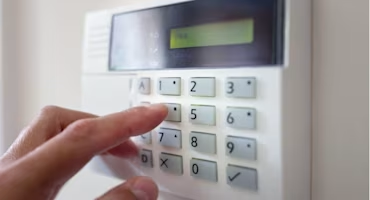
Measures such as fitting an insurer-approved burglar alarm can help to keep unoccupied home insurance costs down because they reduce the chances of you having to make a claim.

If you need unoccupied home insurance for a full year, paying for your premium upfront, rather than in monthly instalments, works out cheaper over the year because monthly repayments usually have interest added on.
Increasing the amount you will pay towards any claim can cut your premiums, but be sure you can afford the excess amount you choose.

If you’re not living in a property, you may well be removing many of your valuables, such as jewellery and electronic devices. So, bear this in mind when estimating the value of the home’s contents.

As with any kind of insurance, the aim is to get the level of cover you need for the lowest possible price.

If your property will be unoccupied for just a few weeks or months, many insurers now offer short-term unoccupied home insurance, which can be arranged for as little as 30 days at a time.
This type of cover is ideal if your property will only be empty temporarily – for example, during a house move, while waiting for tenants, or while renovations are finishing.

We’re here to help you protect the things that matter most

Pop in some details about your home and your personal belongings, and compare quotes in just a few minutes

We’ll search the market for the cheapest deals, and help you choose the cover that suits your needs

We’ll show you claims experience for policies, to help you choose the right home insurance policy for you
Yes – you must always tell your insurance provider if your home will be unoccupied for longer than the period stated in your policy (often 30 or 60 days). Failing to do so can put your cover at risk.
If you don’t inform your insurer and something happens – like a burst pipe, theft, or fire – your claim could be denied because the property’s status changed without their knowledge. Insurers treat unoccupied homes as higher risk as problems can go unnoticed for longer and there’s a greater chance of break-ins or damage.
For example, if you leave your home empty for two months and return to find a serious water leak, your insurer could refuse to pay for repairs if you didn’t declare the property was unoccupied. Similarly, if a burglar breaks in while you’re away for an extended period, your claim might be rejected because the home wasn’t being regularly checked as required by your policy.
Yes — it’s usually more expensive to insure an unoccupied house, because insurers see properties without occupants as higher risk.
Empty homes are more vulnerable to problems like burst pipes, slow-to-detect water damage, vandalism, theft or squatting — all of which increase the chance of a claim.
The longer the property is unoccupied, the higher the risk perceived by insurers, and the higher the premium.
Because of that greater risk, premiums for unoccupied-property insurance tend to be higher than standard home-insurance policies.
If you own a second property that will be unoccupied for longer than 30 days, you will typically need unoccupied property insurance to ensure full protection. Many standard home insurance policies for second homes cover short gaps in occupancy, such as less than 30 days at a time, which is useful for seasonal homes or holiday lets.
It’s important to notify your insurer about how and when the property is occupied. Some insurers have specific rules for seasonal occupancy, requiring evidence that the home is regularly checked or maintained while empty. Failing to inform your insurer about long periods of vacancy could result in your claim being denied, even if the home is otherwise insured.
If you’re a landlord, most landlord insurance policies cover your rental property while it’s unoccupied for short periods, often up to 60 days between tenants. This means minor gaps in occupancy are usually protected without needing separate cover.
However, if your property is expected to be empty for longer than your policy allows, you’ll need specialist unoccupied home insurance. This type of cover can run for up to 12 months and protects the building (and sometimes contents) against risks like fire, vandalism, burst pipes, or squatters — which standard landlord policies may exclude during extended vacancies.
Some insurers allow you to extend coverage for unoccupied periods under your landlord policy, but check the terms carefully, as exclusions often apply.
Minimising vacancy periods not only helps keep rental income steady but can also reduce your premium costs, as insurers view shorter gaps between tenants as lower risk. Regular inspections, prompt tenant placement, and maintaining security measures like locks and alarms can also help maintain coverage and lower premiums.
Yes, you can take out unoccupied house insurance to cover a property that is up for sale and won’t be lived in for longer than 30 or even 60 days. This can often be taken out as an add-on to your existing home insurance policy.
We get paid by the companies we work with, but the payment we get doesn’t have any bearing on the information we provide. We get paid in different ways, depending on the type of product or service you buy through us. Our goal is to search deals from as wide a range of companies as possible, but we only show results from our partner providers.
Our comparison service is, and will always be, free to use.
One of the best ways to get the lowest prices and best deals is to compare quotes from different companies. We do the work for you, comparing quotes side-by-side and giving you all the information you need so you can choose the right deal for your needs and your wallet.
We don’t give recommendations or financial advice, but we give you clear information so you can choose financial products that suit your circumstances.
No, not every company can be included in our service. This is because some companies don’t want their products included on comparison sites, and some decide that they would rather not pay a fee. There are also a few smaller providers who can struggle to cope with the volume of customers that can find their products if they appear on MoneySuperMarket.
Our goal is to search deals from as wide a range of companies as possible so that you can choose the deal that suits you.
Yes, you can earn SuperSaveClub rewards when you buy home insurance through MoneySuperMarket.
This includes:
Up to £15, which you can withdraw as a pre-paid Mastercard or a gift card for brands like Sainsbury's and Amazon.co.uk
Free Days Out pass (worth £180), which gives free entry to a range of UK attractions
Cashback of up to 10% when you spend at brands including eBay, Just Eat and Argos
To earn SuperSaveClub rewards on purchases you must:
Sign up to SuperSaveClub (it's free)
Be signed in to your account when you make the purchase
More information can be found on our SuperSaveClub homepage.
Yes, home insurance is included in our Super Save Price Promise.
If you buy through us then find the same deal for less we will:
refund the difference
give you a gift card worth up to £20
Terms and conditions apply. More information can be found on our Price Promise page.
Reviewed on 12 Dec 2025 by

B Franklin
Anonymous
Dawn Devlin
Ian Millington